The Dutch superyacht sector is assessing the potential consequences of sanctions against Russia
Russia’s invasion of Ukraine has the Dutch superyacht sector assessing the way forward as unprecedented sanctions rain down on the government in Moscow and mega-rich Russians that nurture cozy relations with it. An informal IBI poll of half a dozen custom superyacht builders in the Netherlands found a sense that the war, and the market turmoil it ignited, will upend years of healthy growth and signal a return to former, more modest levels of demand. Of late, Dutch superyacht builders returned to their halcyon days of the early years of the 21st century. In 2020, for instance, the Holland Yachting Group of superyacht builders and their suppliers won orders of €2.15bn, double that of 2019. The value of its 2020 order book was €5.38bn. In 2021, Heesen Yachts delivered 6 superyachts, and Damen Yachting launched its 17th Yacht Support vessel.
“It’s too early to say what the short-term impact of US, UK, and EU sanctions will be,” said one industry insider.
“But they could affect the number of future clients. That said, superyachts of our kind are a product appreciated by a truly international clientele based in many different parts of the world, from the far-East to the Americas to the Middle East.”
The industry people IBI contacted spoke on condition they and their companies are not identified for fear of aggravating already fraught market conditions.
The Ukraine war has generated unprecedented sanctions from the US, the EU, Japan, Canada, Australia and many other countries targeting Russia and Russian individuals accused of conspiring with the Moscow regime. The EU and the US target Russian oligarchs. The US and Britain alone have identified more than 100 Russian individuals and entities for sanctions. “We’re joining with European allies to find and seize their yachts, their luxury apartments, their private jet,” President Biden said this week.
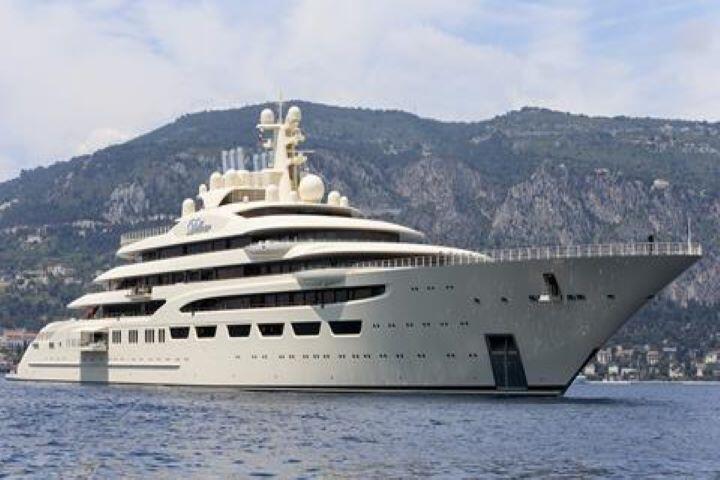
German authorities reportedly seized the 156m (541ft) Dilbar of Russian billionaire Alisher Usmanov in Hamburg, two days after he was put on the EU sanctions list. At the time of going to press French customs authorities had also impounded the superyacht owned by Rosneft CEO, Igor Sechin. The sense of a net closing in has forced many big boat owners to shift their assets beyond US, European and other Western jurisdictions. According to Business Today, at least five superyachts owned by Russian billionaires were anchored or cruising yesterday around the Maldives in the Indian Ocean, while other boats have ben leaving the likes of Spain, for the marinas of Montenegro.
Some 40 Dutch commercial shipbuilding companies are active in Russia. The Netherlands Maritime Technology trade lobby said they get up to 30% of their turnover from exports to Russia. It issued no data for Dutch superyacht builders.
“The impact of the Ukraine war sanctions is bound to be immediate on Dutch motor-powered superyachts,” one sector source. “Russians generally don’t buy sailing yachts. And while they don’t make up the majority of the Dutch sector’s clients, there is an immediate impact from sanctions as payments for superyachts are made in stages. These are timed to specific events such as the completion of a keel, or a hull, or a superstructure.”
Russians may represent about 10% of superyacht owners globally, they own some of the largest vessels. Dutch yards building well past 50m never reveal the nationalities or names of their clients.
Source: IBI News