US boating & fishing interests appeal to Congress on speed restrictions
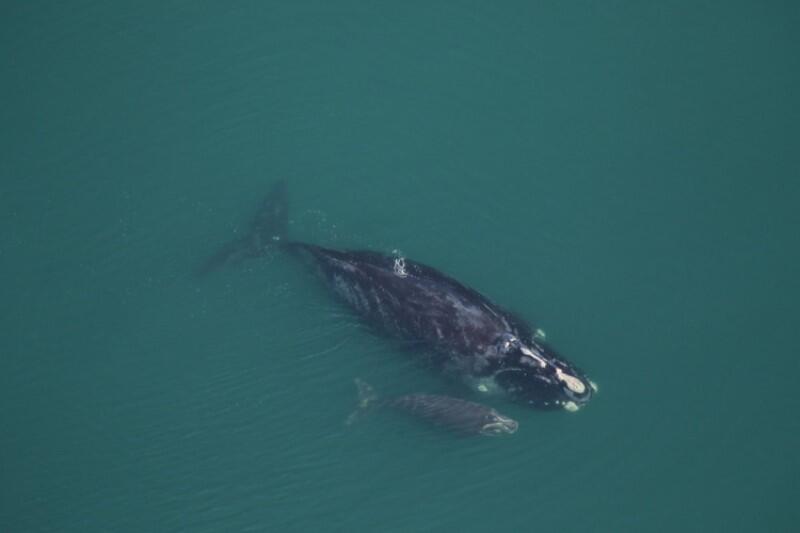
In a nearly three-hour hearing before the House Committee on Natural Resources, Subcommittee on Water, Wildlife and Fisheries, the US boating and fishing industry made its case Tuesday against what it calls a “dangerous and misguided” vessel speed restriction proposal from the National Oceanic and Atmospheric Administration (NOAA) aimed at protecting the endangered North Atlantic right whale (NARW).
The proposed rule would set a mandatory 10kt speed limit on vessels 35ft and larger along most of the US eastern seaboard for up to seven months of the year and as far as 90 miles offshore in some areas that could also threaten the US$84bn economic impact and 314,000 related jobs fishing and boating bring to the affected area.
The hearing brought to the fore what stakeholders are calling the “glaring inaccuracies and false assumptions NOAA made when putting forth its proposed rule changes.” NOAA estimates the new rule would impact 9,300 recreational boats, but US Coast Guard data from 2021, analysed by Info-Link Technologies, shows 63,000 registered recreational saltwater fishing boats along the east coast. Similarly, the agency predicts an annual estimated cost of the rule at US$46m.
“I don’t believe that the risk assessments are accurate. NOAA got it wrong on the economics, they got it wrong on the number of vessels, and they got it wrong on the nature and engineering of the vessels,” testified Frank Hugelmeyer, president of the National Marine Manufacturers Association (NMMA).
Since 2008 there have been five documented NARW strikes by vessels under 65ft and approximately 5.1 million recreational fishing trips during the same period, according to NOAA’s own data, meaning the chances of a recreational boat under 65ft striking a right whale are less than one-in-a-million.
Perhaps the most compelling testimony came from Captain Fred Gamboa, owner of Andreas’ Toy Charters, which operates a 39ft and 44ft fishing boat.
“We have a symbiotic relationship with whales, they help me find tuna,” he told the committee. “There are certain ways they travel through the water that are easy to predict, especially when they are around the prey species that we are looking for.”
Gamboa suggested that under the proposal, he would lose up to 70 fishing trips annually. “I would have to sell my boats,” he stated flatly.
One positive change that has recently occurred is NOAA’s agreement to assign a representative to the Whales and Vessel Safety (WAVS) taskforce, an alliance of recreational and commercial marine, technology, power, petroleum and conservation organisations looking for existing and new technological solutions for monitoring marine mammals off US shores.
NOAA is currently reviewing some 90,000 public comments about the rule, which could change its scope when finalised, a process that is expected to take some four to six months.
Source: IBI News
Photo: Florida Fish and Wildlife Conservation Commission taken under NOAA permit 20556.