The island of Šolta – an ideal combination of proximity to the mainland and complete island authenticity
The island of Šolta is located in central Dalmatia, west of Split and the island of Brač, and is one of the quieter and less urbanized islands of the Croatian Adriatic. With an area of around 60 km² and a relatively low population density, Šolta is known for its preserved nature, traditional lifestyle, and authentic Mediterranean atmosphere. Its proximity to the mainland—just a few nautical miles from Split—makes it easily accessible, yet it remains sufficiently isolated to maintain its peace and authenticity.
Geographically, Šolta is a typical karst island with gently rolling terrain, low hills, and a rocky coastline interrupted by numerous bays. The most notable settlements and bays include Maslinica on the western side, Nečujam, Rogač as the main port, Stomorska on the eastern side, and Grohote as the administrative center. The coastline is highly indented and offers several naturally protected anchorages, making the island highly suitable for sailors seeking safe and peaceful stays.
The history of Šolta dates back to ancient times, when it was known as Olyntha or Solenta. Throughout history, it was influenced by various civilizations, including the Romans and the Venetian Republic. The local population has traditionally been engaged in fishing, olive growing, viticulture, and beekeeping. Olive oil production has been a defining feature of the island since antiquity, and it remains one of its most important cultural and economic symbols today. During Ottoman incursions into Dalmatia, Šolta also served as a refuge for mainland populations, further shaping its historical role as a safe and discreet island.
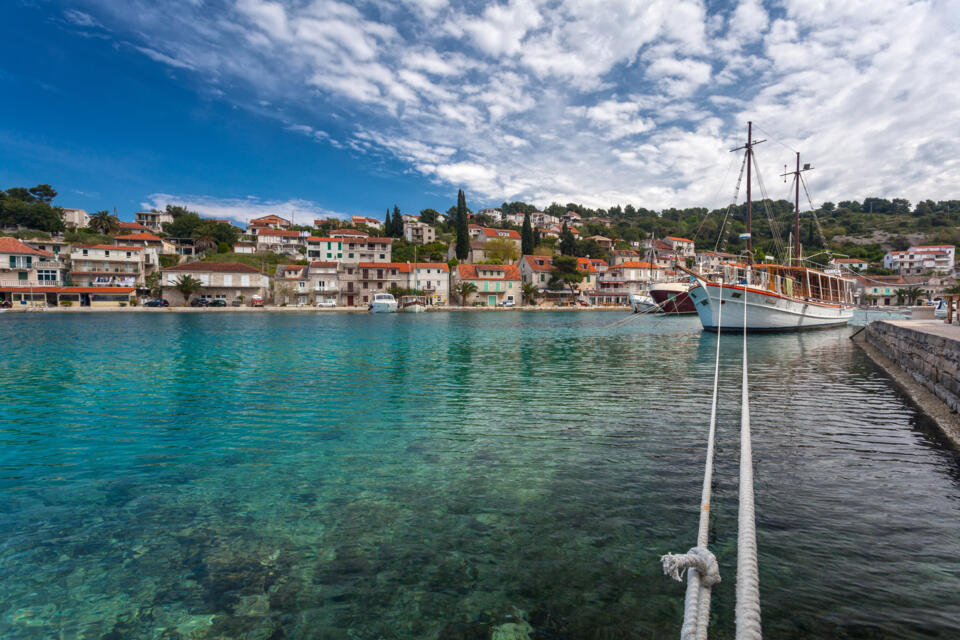
Unlike more developed tourist destinations, Šolta has preserved a moderate level of development and an authentic way of life. There are no large hotel complexes or mass tourism infrastructure, which contributes to its charm. The local community continues to maintain traditional values, and life on the island follows a slow Mediterranean rhythm. Maslinica is particularly noteworthy as it has become one of the most attractive nautical locations in recent decades, thanks to its marina and restored historical architecture.
From a nautical perspective, Šolta is highly significant due to its position near Split and its location at the entrance to the central Dalmatian archipelago. The island offers several high-quality anchorages and ports, including Nečujam Bay, known for its size and protection, and Maslinica, which provides safe moorings and good infrastructure for sailors. The eastern side of the island, facing Brač, also offers quieter bays ideal for anchoring in a natural environment. The sea around Šolta is known for its clarity and rich marine life, further enhancing its appeal for diving and water activities.
In addition to its natural and nautical value, Šolta is famous for its excellent gastronomy based on local products. Olive oil, wine, honey, and fresh fish form the foundation of the island’s cuisine. Šolta olive oil is particularly renowned for its quality and long tradition of production. The local cuisine is simple yet flavorful, rooted in the Mediterranean diet and locally sourced ingredients.
In conclusion, the island of Šolta represents a perfect blend of proximity to the mainland and full island authenticity. Its natural beauty, tranquility, rich tradition, and solid nautical infrastructure make it an exceptionally attractive destination for those seeking a relaxed and genuine Mediterranean experience.
Photo: Matija Prajo/CTB, Mario Jelavić/CTB